Don’t Let Your Holidays Go Up in Smoke

The holiday season is supposed to be a time of joy and celebration with family and friends to give thanks for the life we have and the people we share it with.  During this time, many family traditions are put into motion.  Secret family recipes come out for the holidays, the decorations go up to celebrate the season, and the candles come out to enhance the ambiance of the home.  All these things, if not properly managed, can lead to an unforgettable holiday season for the wrong reasons.
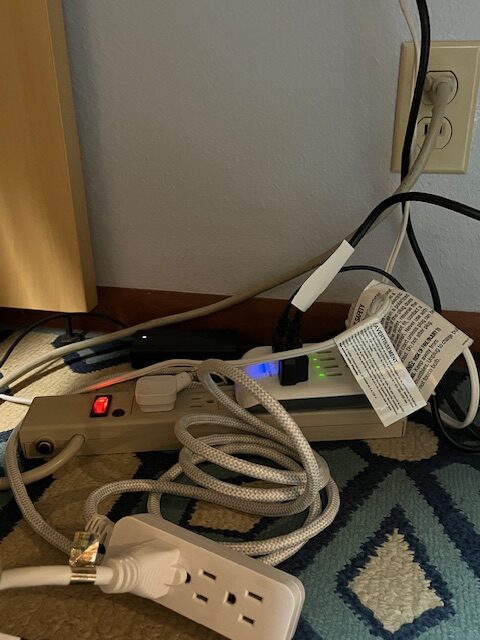
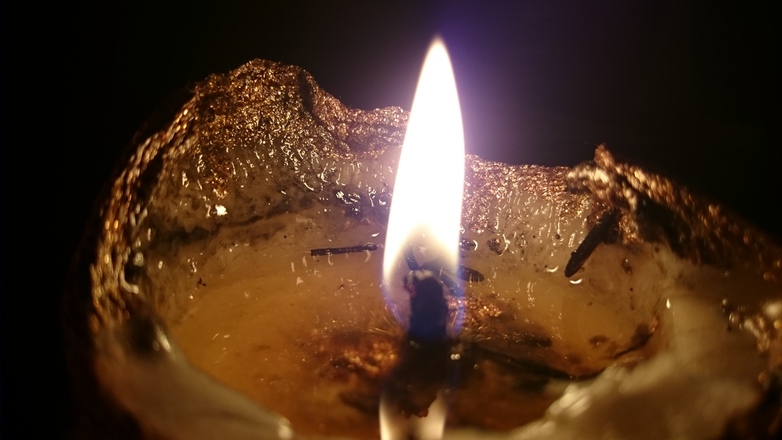
According to the National Fire Protection Association (NFPA), cooking, decorations, and candles are the leading causes of fires during the holiday season.  Cooking fires peak on Thanksgiving, Christmas Eve, and Christmas day and are usually the result of unattended cooking due to family distractions, multi-tasking, or exhaustion.  Decorations account for an estimated average of over 800 fires per year and cause an estimated $17 million in damage per year.  Over 50% of decoration fires were started from electrical issues such as improper equipment, installation, or faulty bulbs.  Candle fires peak during the holiday season contributing to 12% of Christmas tree fires and 50% of decoration fires.  The most important way to protect yourself against these common issues is to be self-aware and educate yourself.
Fires can be avoided.  To find out more about the some of the contributing factors to fires during the holiday season and some tips to ensure a safe holiday, visit the NFPA and take advantage of the free resources and tip sheets available to be more prepared.  Hope you and your loved ones have a safe and joyous holiday season!

Looking for a Rescue?

Every once in a while, we find ourselves in need of a rescue.  Whether it’s from an accident, a natural disaster, or sometimes just from ourselves, there are available resources to help you out of a tough spot.  One such resource that you might not have heard about is the Spokane County Technical Rescue Team. 

At a 2025 ASSP Inland Northwest / Pacific NW Section AIHA Chapter meeting held in Spokane, WA, the Technical Rescue Team provided valuable insight into the roles that they perform to support the community.  They are trained and equipped to respond to various incidents that include trench or building collapses, confined spaces, or rescues that require advanced technical rope or water skills.  They spoke about their continuing evolution of training and resources in order to fill gaps in response activities throughout the region.

To find out more about what’s happening in Spokane County Fire District 9 and the services they provide, check out their website here.

New Retail Tax Takes Effect Oct. 1st

Starting tomorrow many Washington state businesses will have to start collecting retail sales tax for previously exempted services:

  • Advertising services
  • Live presentations [Spring Environmental’s seminars are included]
  • Information technology services.
  • Custom website development services.
  • Investigation, security, and armored car services.
  • Temporary staffing services.
  • Sales of custom software and customization of prewritten software.

Learn more about ESSB 5814 from the Washington Department of Revenue’s website.

CAA Limited to Construction Not Reactivation

Since the 1970s, the EPA has applied its “Reactivation Policy” to idle facilities, subjecting sources shut down for two or more years to new source review if restarted. There were some options to rebut this presumption usually related to demonstrating intent to restart at the time of shutdown (e.g. maintenance activities, operator statements, and the cost of reactivation). This policy was specifically articulated in the 1999 Monroe Order.

On July 25, 2023, the U.S. Court of Appeals for the Third Circuit rejected an EPA determination that a specific stationary source would require an NSR permit to restart a long-idle refinery in the US Virgin Islands based on the principles in the “Reactivation Policy”. The court held that the Clean Air Act (CAA) unambiguously limits NSR applicability to construction of new sources and modifications of existing sources, not mere operation.

Administrator Zeldin’s September 18, 2025 memorandum (2025 Zeldin Memo) formally rescinds the “Reactivation Policy” nationwide. EPA will apply NSR only where a restart involves a “major modification”—a physical or operational change that increases emissions above regulatory thresholds.

The 2025 Zeldin Memo also stresses the importance of nationwide consistency, both that EPA regional offices should no longer apply the “Reactivation Policy” in permitting or enforcement and that State and local agencies are encouraged to align with this approach.

Ecology Arranging Disposal of Municipal AFFF Foam

The Washington State Department of Ecology is launching the Aqueous Film-Forming Foam (AFFF) disposal program to support fire departments in Washington state. This initiative addresses the urgent need to safely manage and dispose of AFFF, a firefighting foam that contains per- and polyfluoroalkyl substances (PFAS). Ecology’s AFFF disposal program covers the costs of disposal for qualifying Washington municipal fire departments and public first responders. In Washington state, waste with PFAS is classified as dangerous waste.

After completing an extensive review of disposal methods for AFFF, Ecology chose to dispose of the foam at the Clean Harbors RCRA-permitted incinerator in Aragonite, Utah. Under Ecology’s program, Clean Harbors, a permitted hazardous waste hauler, will collect approximately 32,000 gallons of AFFF from 77 participating fire stations, mostly in an around the Puget Sound region.

For more information, see the EIS here and the letter to the public here.

Definition of “begin actual construction” under CAA

EPA recently issued new guidance that clarifies its interpretation of “begin actual construction” under the Clean Air Act’s (CAA) New Source Review (NSR) preconstruction permitting program. Through this guidance, EPA is allowing building activities that are not related to air emissions, such as installing cement pads, to proceed before companies obtain an NSR permit.

In the new guidance, EPA stated that if a structure contains no emissions units, it is not considered a “source” under the CAA because it does not emit or have the potential to emit air pollutants. EPA further clarified that the NSR regulation “does not prohibit initiation of physical on-site construction of those parts of a facility that do not qualify as an emission unit.”

EPA’s recently released 2025 Spring Agenda identifies that EPA plans to propose a rule revising the definition of “begin actual construction” by January 2026 and to finalize the rule by September 2026.