CAA Limited to Construction Not Reactivation

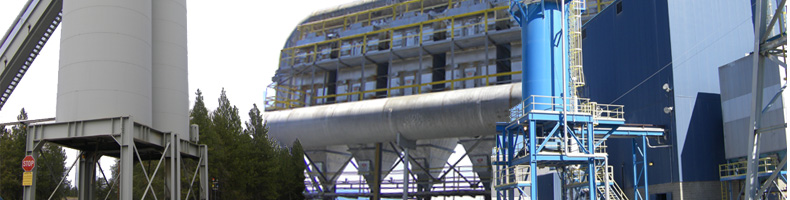
Since the 1970s, the EPA has applied its “Reactivation Policy” to idle facilities, subjecting sources shut down for two or more years to new source review if restarted. There were some options to rebut this presumption usually related to demonstrating intent to restart at the time of shutdown (e.g. maintenance activities, operator statements, and the cost of reactivation). This policy was specifically articulated in the 1999 Monroe Order.

On July 25, 2023, the U.S. Court of Appeals for the Third Circuit rejected an EPA determination that a specific stationary source would require an NSR permit to restart a long-idle refinery in the US Virgin Islands based on the principles in the “Reactivation Policy”. The court held that the Clean Air Act (CAA) unambiguously limits NSR applicability to construction of new sources and modifications of existing sources, not mere operation.

Administrator Zeldin’s September 18, 2025 memorandum (2025 Zeldin Memo) formally rescinds the “Reactivation Policy” nationwide. EPA will apply NSR only where a restart involves a “major modification”—a physical or operational change that increases emissions above regulatory thresholds.

The 2025 Zeldin Memo also stresses the importance of nationwide consistency, both that EPA regional offices should no longer apply the “Reactivation Policy” in permitting or enforcement and that State and local agencies are encouraged to align with this approach.
Ecology Arranging Disposal of Municipal AFFF Foam

The Washington State Department of Ecology is launching the Aqueous Film-Forming Foam (AFFF) disposal program to support fire departments in Washington state. This initiative addresses the urgent need to safely manage and dispose of AFFF, a firefighting foam that contains per- and polyfluoroalkyl substances (PFAS). Ecology’s AFFF disposal program covers the costs of disposal for qualifying Washington municipal fire departments and public first responders. In Washington state, waste with PFAS is classified as dangerous waste.

After completing an extensive review of disposal methods for AFFF, Ecology chose to dispose of the foam at the Clean Harbors RCRA-permitted incinerator in Aragonite, Utah. Under Ecology’s program, Clean Harbors, a permitted hazardous waste hauler, will collect approximately 32,000 gallons of AFFF from 77 participating fire stations, mostly in an around the Puget Sound region.

For more information, see the EIS here and the letter to the public here.

Definition of “begin actual construction” under CAA

EPA recently issued new guidance that clarifies its interpretation of “begin actual construction” under the Clean Air Act’s (CAA) New Source Review (NSR) preconstruction permitting program. Through this guidance, EPA is allowing building activities that are not related to air emissions, such as installing cement pads, to proceed before companies obtain an NSR permit.

In the new guidance, EPA stated that if a structure contains no emissions units, it is not considered a “source” under the CAA because it does not emit or have the potential to emit air pollutants. EPA further clarified that the NSR regulation “does not prohibit initiation of physical on-site construction of those parts of a facility that do not qualify as an emission unit.”

EPA’s recently released 2025 Spring Agenda identifies that EPA plans to propose a rule revising the definition of “begin actual construction” by January 2026 and to finalize the rule by September 2026.

Reconsideration of the Greenhouse Gas Reporting Program

EPA’s 9/16/2025 proposal would eliminate federal reporting obligations under the Greenhouse Gas Reporting Program (GHGRP) for a wide range of industrial sectors and suspend most remaining requirements until 2034.

The proposed rule would permanently remove reporting obligations for 46 source categories after reporting year 2024 — including stationary fuel combustion, electricity generation, aluminum and cement production, petroleum refining, pulp and paper manufacturing, municipal solid waste landfills, wastewater treatment, and industrial GHGs. It would also eliminate requirements for suppliers of carbon dioxide, geologic sequestration, and carbon injection activities.

For the petroleum and natural gas industry, EPA proposes to defer reporting for nine oil and natural gas segments until 2034 — including onshore and offshore production, natural gas processing, transmission compression, pipelines, underground storage, and liquefied natural gas storage, import, and export facilities.

See the proposal in the Federal Register at https://www.govinfo.gov/content/pkg/FR-2025-09-16/pdf/2025-17923.pdf

A First in Settlement Enforcement, What You Need to Know!

Did you know that there is rulemaking regarding accidental release reporting of hazardous materials to the Chemical Safety Board (CSB)?  According to the Clean Air Act, Section 112(r), owners/operators of facilities are required to report accidental releases of hazardous materials that result in significant property damage, serious injury, or fatality to the CSB.  The Clean Air Act empowers the EPA to establish enforcement actions against entities that fail to report an accidental release.  The first of its kind enforcement actions were levied against Pacific Gas and Electric Company on July 28, 2025.

The incident involving the enforcement action occurred on June 8, 2023, when a pipeline worker suffered serious injury due to an accidental release of natural gas.  The CSB was aware of the incident and advised the company to complete the accidental release report, but they failed to do so.  The CSB then turned the incident over to the EPA for enforcement.  The cooperative effort resulted in a civil penalty of $45,273 and the company had to submit the report to the CSB.

This may end up being the first and only collaborative enforcement action of this type as the Federal Government is proposing to shut down the CSB by October of this year.  If the CSB is shutdown, the rule will likely be amended to address accidental reporting procedures for the EPA. For more information, you can read the EPA news release on the settlement here.  To review the reporting rule, click here.

Washington DNR Burn Ban

Effective Friday, June 6, 2025: The Washington State Department of Natural Resources (DNR) has issued the following:

  • Silvicultural debris burning by rule on DNR jurisdiction is not allowed.
  • Silvicultural debris burning by permit on DNR jurisdiction is allowed, subject to conditions on the permit.
  • Campfires are allowed in approved designated campgrounds only.

For more information, visit DNR’s burn restrictions webpage.