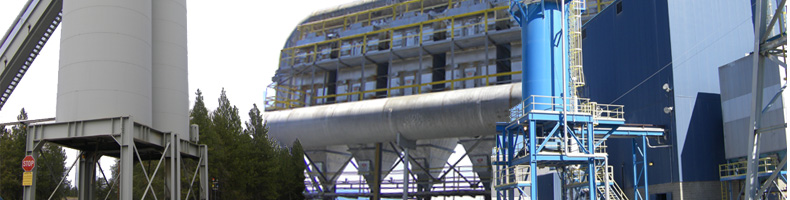
Changes coming to NAAQS for PM2.5!

On January 6, 2023, EPA published a proposed rule for particulate matter National Ambient Air Quality Standard (NAAQS) that would retain the primary 24-hr PM2.5 standard (35 µg/m3) and reduce the annual standard from 12 µg/m3 to 9 µg/m3. The agency is also taking comments on reducing the 24-hr PM­2.5 standard as low as 25 µg/m3 and the annual standard as low as 8 µg/m3. The Clean Air Act requires that EPA review the NAAQS every five years to ensure their adequacy. The last review of the PM NAAQS was completed in December 2020 with no change, but EPA announced their decision to reconsider this action in June 2021.  Although no changes to the PM10 NAAQS standard are expected at this time, changes to the PM2.5 NAAQS standard are proposed.

This proposal takes into account thousands of scientific studies since the last update of PM NAAQS in 2012 that have demonstrated the dangers of long term soot exposure. The evidence supports a likely relationship between long-term PM2.5 exposure and respiratory effects, nervous system effects, and cancer. EPA estimates that if finalized, a strengthened annual PM2.5 standard of 9 µg/m3 would:

  • Prevent up to 4,2000 premature deaths per year;
  • Prevent 270,000 lost workdays per year; and
  • Result in as much as $43 billion in net health benefits in 2032.

EPA accepted public comments on the proposed rule through March 7th and has already held public hearings. Additional information will be made available on the National Ambient Air Quality Standards (NAAQS) for PM webpage.

State, local, and tribal air agencies will be required to use this standard after it is finalized federally. Once in effect, this will cause more difficulty when emission units require PM2.5 modeling as part of a permit application or modification. Several areas throughout the Pacific Northwest have high particulate background concentrations, which will narrow the allowable “new” particulate emitted even further. If you are planning any facility expansions or new sources that include particulate matter emissions and want to know if this rule would effect your business, please contact Spring Environmental for more information.

EPA Expands Definition of “Waters of the United States”

Effective March 20, 2023, the portion of waters of the United States (WOTUS) subject to federal regulatory control under the Clean Water Act (CWA) will be increasing.  This is the latest iteration of the rule, which the Environmental Protection Agency and Corps of Engineers describe as “a clear and reasonable definition of waters of the United States” designed to “reduce the uncertainty from constantly changing regulatory definitions that has harmed communities and our nation’s waters.”

As before, wetlands adjacent to traditional navigable waters, territorial seas, or interstate waters are under jurisdiction of the CWA.  The new rule will include tributaries that flow into these waters, as well as nearby wetlands, depending on their permanence and interconnectedness.  If the waters are “relatively permanent” or can “significantly affect WOTUS”, private and public parties performing work in or near these new waters may be subjected to regulations and permitting under the CWA.  These waters can include, naturally occurring ditches, prairie potholes, ephemeral drainages, and low spots on farmlands, and can be considered “relatively permanent” if continuous flow exists at any time during a year.  Significant potential effects include nutrients, sediment, temperature, and pollutants.

Additional information on this rule can be found here: https://www.epa.gov/wotus/revising-definition-waters-united-states

Spokane County Burn Ban (effective 7/22/2022)

Fire Marshals from Spokane Valley Fire Department (SVFD), City of Spokane Fire Department (SFD), Spokane County, City of Cheney, City of Airway Heights and City of Deer Park have all enacted the Fire Danger Burn Restriction effective Friday, July 22.

Campfires, backyard fire pits, and burning of fields and yard waste is not allowed.  With high temperatures in the forecast, all Cities and Fire Agencies want to keep area communities safe from fire risk by reducing the number of human-caused wildfires. See  Spokane County’s flyer here.

While the burn restriction is in place, any person found with a recreational fire or conducting open burning who fails to take immediate action to extinguish or otherwise discontinue such burning when ordered or notified to do so shall be charged with a misdemeanor. (IFC 109; SCC 3.02)

Wildfire Smoke Rule Enacted to Protect Workers

Washington State Department of Labor & Industries (L&I) filed an emergency rule effective July 16, 2021, to protect workers from potential hazards related to wildfire smoke. The emergency rule applies to workplaces where employers “reasonably anticipate that employees may be exposed to wildfire smoke.” Wildfire smoke exposure is potentially a serious health risk to all workers, but those working outside in industries such as construction and agriculture are significantly impacted.

Inhalation of particulate matter measured at 2.5 micrometers (PM2.5), which is elevated during wildfire smoke events, has been shown to cause adverse cardiovascular health effects. The emergency rule includes employer requirements for checking PM2.5 levels, communication, training, monitoring, and implementation of various exposure controls, as well as requirements for providing respiratory protection when PM2.5 levels reach certain levels.

The rule goes into effect July 16, 2021, and enforcement of the rule occurs at later dates: July 23, 2021, for exposure controls and the respiratory protection provision, and August 2, 2021, for worker training.

For more information regarding the rule, its requirements and exemptions, and wildfire smoke hazards, see https://lni.wa.gov/safety-health/safety-topics/topics/wildfire-smoke.

DNR Extends Burn Ban to Include Campfires (7/2/2021)

All campfires are prohibited, including campfires in campgrounds, in Spokane County.

Rule burns (burns without a written permit issued by DNR) and permit burns continue to be prohibited by DNR within Spokane County.

“The record-breaking temperatures we saw last weekend have left our state bone dry,” said DNR Commissioner Hilary Franz, “and the risks from fireworks and other holiday activities make the situation even more precarious. I am asking everyone in Washington to do their part to protect our firefighters and our communities this summer. Please do not start a fire outside, and please do not set off your own fireworks this weekend.”

Learn more about DNR burn restrictions.

Outdoor Recreational Fires and Open Burning also continue to be restricted due to the hot, dry conditions and fire danger in Spokane County.

Learn more at SpokaneCleanAir.org/burning/burn-restrictions/.


Spokane Area Burn Ban (effective 6/4/2021)

Fire Marshals from Spokane Valley Fire Department (SVFD), City of Spokane Fire Department (SFD), Spokane County, City of Cheney, City of Airway Heights, and City of Deer Park have all enacted the Fire Danger Burn Restriction.  Due to short-range weather forecast, along with the low amount of rainfall this spring in Spokane County and discussions with our area Fire Chief partners, we feel it is prudent to initiate Burn Restrictions for Spokane County until further notice.

Unauthorized open burning and unauthorized recreational fires are restricted until this order is lifted or unless otherwise permitted by law enforcement or authorized agencies.  Rule burns (burns without a written permit issued by DNR) and permit burns are prohibited by DNR within Spokane County. Campfires are only allowed in approved designated campgrounds.

Breathing smoke affects the respiratory system and is especially harmful to everyone and most especially, younger, and elderly generations, and those with heart and respiratory conditions.  Details, including photos of devices allowed/not allowed can be found here. 

EPA’s Leadership

On March 11th, Michael S. Regan was sworn in as Administrator of the Environmental Protection Agency replacing Andrew S. Wheeler.

Prior to his nomination as EPA Administrator, Michael Regan served as the Secretary of the North Carolina Department of Environmental Quality (DEQ), Associate Vice President of U.S. Climate and Energy, and as Southeast Regional Director of the Environmental Defense Fund, and national program manager responsible for designing strategic solutions with industry and corporate stakeholders with the USEPA.

Other EPA administrative staff include Chief of Staff Dan Utech (1/20/2021) and Special Assistant to the Administrator John Lucey (1/20/2021).  The Deputy Administrator position is still vacant but 1/15/2021 Biden identified Janet McCabe as his nominee.  EPA’s administrative organization chart is available at https://www.epa.gov/aboutepa/organization-chart-office-administrator.

OSHA’s Leadership

On April 9th, President Biden announced Doug Parker is his nominee to lead OSHA, replacing Acting Assistant Secretary of OSHA Loren E. Sweatt . From the official announcement (link below)

Doug “previously served in the Obama Administration as Deputy Assistant Secretary for Policy in the Department of Labor’s Mine Safety and Health Administration, and was a member of the Biden-Harris transition team focused on worker health and safety issues. He also held positions as a senior policy advisor and special assistant at the Department of Labor. He currently serves as chief of California’s Division of Occupational Safety and Health (Cal/OSHA)”.

President Biden Announces his Intent to Nominate Key Members for the Department of Veterans Affairs, Department of Labor, Department of Energy, and Department of Transportation | The White House

Other OSHA leaders include Chief of Staff Leah Ford (2/16/2021), Principal Deputy Assistant Secretary James Frederick (1/28/2021), Deputy Assistant Secretary for Pandemic and Emergency Response Joseph Hughes, Jr. (1/28/2021), and Deputy Assistant Secretary Amanda Edens (4/1/2021).  OSHA’s administrative organization chart is available at https://www.osha.gov/sites/default/files/OSHAorgchart.pdf.

Safety Fest 2021 (Boise) – Chemical PFAS

Beth Hodgson presented today at the Safety Fest of the Great Northwest virtual conference on “Chemical PFAS – Health & Remediation Update”.   Polyfluroalkyl Substances (PFAS) are manmade chemicals with a carbon and fluorine atom backbone that are “forever” chemicals.  Copies of the handouts, EPA December 2021 guidance, and EPA FACT sheet are available here.